A contributed perspectives piece by Sandra Parks
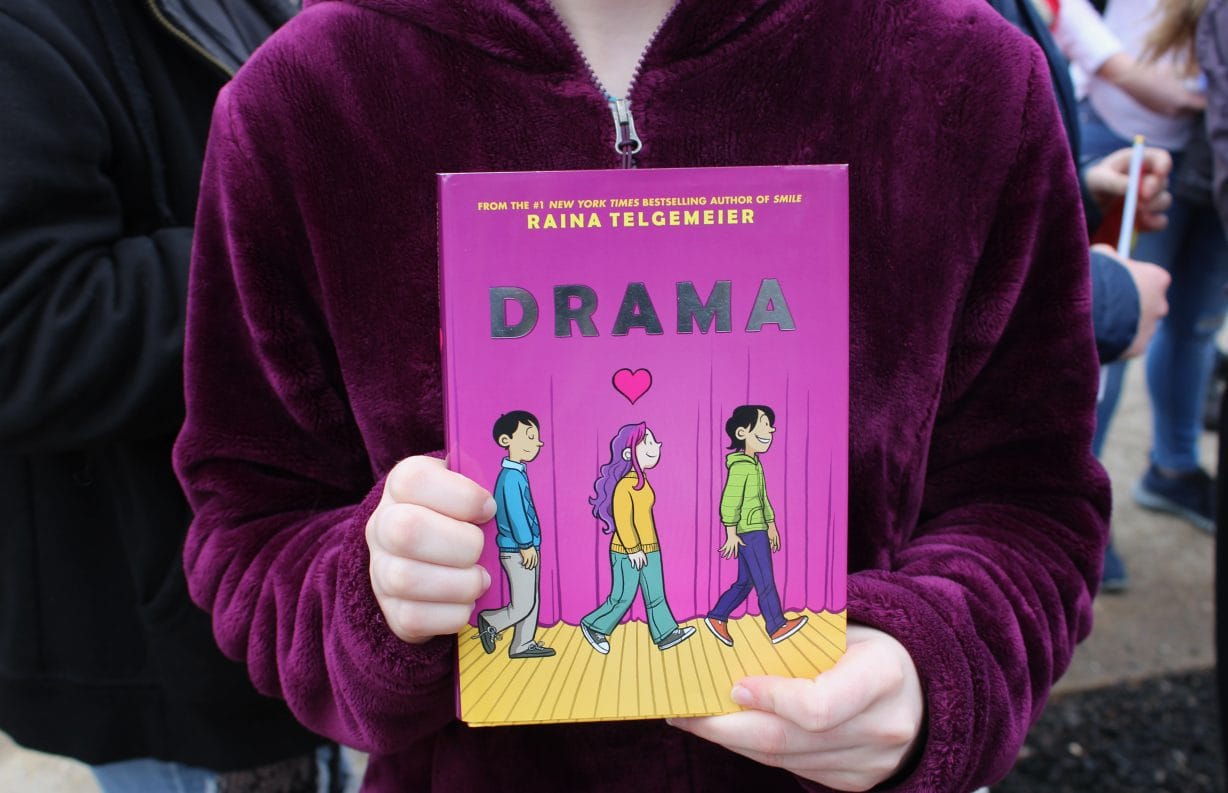
October 5-11 marked the annual observance of Banned Book Week, in which we traditionally focus on the safeguards that keep America from banning books. In the past the books often featured during this week are books that have not actually been banned, but were challenged somewhere.
According to PEN America, 6870 books were banned last year. Since the 2022-2023 school year, a staggering total of 20,378 books have been banned in various locations. Once a book is banned, it generally remains banned in that location. Banned Books Week is now a sobering parade of the rising number of books students can no longer access in their school libraries, instead of a celebration of our Freedom to Read guaranteed by the First Amendment.
As a school librarian, I would use Banned Books Week to teach lessons about how the reconsideration process protects students’ right to read by ensuring that book removal is a community process and books are given a fair and equitable review. I described this process in 2021 for the Citizen, Community Perspective: Reconsidering Books— Protecting Students and Their Right to Read. These safeguards are in danger, and Rockingham County is an example of how censorship happens.
Book banning is usually a local decision. Only Utah and South Carolina have issued statewide no read lists. Florida, Texas, and Tennessee lead the other states with the number of book bans but on the national level the Department of Defense has currently banned 596 books at schools on military bases worldwide.
These titles primarily deal with racial and LGBTQ+ themes. There are several advocacy groups, such as Moms for Liberty, Citizens Defending Freedom and Parents’ Rights in Education active in promoting bans, and they make their lists widely available. It is also impossible to know what books have not been purchased for fear of a challenge.
In Virginia, however, it is important to realize that what we see in Rockingham County is unusual for the state. According to a recent report, School Library Book Removals in Virginia by the Joint Legislative Audit And Review Commission (JLARC), Rockingham is second in Virginia for total book bans.
While two thirds of Virginia divisions have not banned any books, Hanover County banned 36% of the 344 books banned statewide, with Rockingham accounting for 17%. RCPS tried to make themselves look better by saying that their removals were “temporary” pending “approval of an updated policy.” However, RCPS adopted their policy in May 2024, and the JLARC survey was in April and May of 2025, so this was disingenuous at best.
How did we achieve second place for book banning in Virginia? Look at the right wing Republican School Board Rockingham elected in 2023. That new Board judged that the current reconsideration process didn’t apply to library books, although it hadrecently been used for challenges to library books. They then immediately banned 57 books based on a list produced by newly elected School Board member Hollie Cave.
The School Board then developed a highly restrictive policy to “review” these books after the fact, ultimately banning 32 books, 15 of them against their review committee recommendation. The policy, which ignored both their own librarians’ input and that of the public, requires removing any book with any mention of anything sexually explicit.
Sara Horst, current School Board chairperson, stated recently that they might have been a little hasty, “I think we should have taken more time at the beginning to listen to our librarians and teachers and try to work more collaboratively,” she said. However, she still voted to ban the books and has offered no changes to policy.
The policy the School Board created is based on the parental notification law § 22.1-16.8. requiring notice for parents of anything sexually explicit used in instruction. This policy defined “sexually explicit” using §2.2-2827. Restrictions on state employee access to information infrastructure which determines what state employees can view on state computers and has nothing to do with literature.
This law ignored the statute defining obscenity, § 18.2-372, which requires consideration of a work as a whole, its purpose, and its literary or artistic value, following the definition for pornography established by the Supreme Court in Miller v. California (1973). When RCPS developed its policy based on this law, they also ignored the fact that the law specifically stated it was not to be used for library books.
The Supreme Court, in Island Trees School District v. Pico (1982) states that while the school boards may exercise control over the curriculum, the First Amendment limits the power of school officials to remove books from the school library. RCPS redefined library books as “supplementary instructional material,” thus giving themselves curricular control over library books.
Island Trees School District v. Pico (1982) also stated that school libraries are places of “voluntary inquiry” and the Supreme Court ruled in favor of the students on First Amendment grounds, stating that the right to read is implied in the First Amendment. Apparently this School Board does not support the idea of voluntary inquiry.
The whole process in Rockingham County has been marked by secrecy. The original list was produced by Hollie Cave, but the origin and the specific nature of the complaints remain unknown.
In the School Board’s haste they neglected to check if the books were actually in Rockingham County Public School libraries. Eight of them were not, another was clearly a mistake, raising questions about the origin of the list. Sara Horst said in a letter responding to Trudy Ludwig, author of the book The Invisible Boy banned by RCPS, “It is likely the parent making the book challenge meant a similarly titled book, not yours. It is unfortunate that many members and educators in our community have manufactured a crisis surrounding your book. I apologize for any angst it has created.”
If they had followed a traditional reconsideration process, a conversation with the person who initiated the complaint would have avoided this mistake, but no one seems to know the identity of any of the complainants. They might not even be parents of Rockingham students.
The composition of the committee appointed to review the 57 books and any other books challenged for sexually explicit material is still secret, as are the School Board’s deliberations. As the Citizen noted in their May 9, 2024 article School district’s review of books is underway — but will be done largely out of the public eye, the review committee was deliberately structured to avoid being subject to FOIA and open meeting requirements.
The discussion at public meetings has consisted of Cave reading page numbers of books she wants banned, Burgoyne, Horst and Cross agreeing for the most part, and Lohr voting with the content review committee recommendations. It is unclear if anyone other than Hollie Cave has actually read any of the books they have voted upon.
A FOIA request for communications among school board members about these books was denied, stating these discussions are “working papers prepared for internal use and decision-making. As such, they are exempt from mandatory disclosure under Virginia law.”
The policy specifies that a report be written about each book, detailing the committee’s recommendation. When I requested several of those reports, I was first questioned about the policy specifying the report requirement. After I provided the screenshot of the applicable policy, I was told they needed an additional week to answer my request. When the response came back, the FOIA officer referenced one report that was exempt from disclosure. I asked about the other reports, and was told they were all compiled into one file, which they again refused to share.
Book bans are more than just removing books. They are about silencing voices and reshaping what a generation is allowed to know. While books may remain available at a bookstore or a public library, many students cannot access those locations.
The school library remains the most accessible for all students, and all students deserve to see books about themselves and to learn about the world in and beyond Rockingham County.
Most other localities in Virginia trust their librarians to use their professional expertise in selection to provide quality collections of a variety of materials so that all students can see themselves in books in their libraries. Rockingham County needs to do the same.
Links
- The Breeze : ‘Unacceptable and hurtful’: RCPS librarians struggle with recent book ban
- The Citizen:
- School district’s review of books is underway — but will be done largely out of the public eye,
- Community Perspective: Reconsidering Books— Protecting Students and Their Right to Read.
- ‘We put the cart before the horse’: County school board members offer mixed feelings as they wrap up banned book reviews
- Code of Virginia :
- § 18.2-372 Article 5. Obscenity and Related Offenses.Joint Legislative Audit And Review Commission (JLARC): School Library Book Removals in Virginia
- Rockingham County Public Schools Supplementary Materials Policy IIAB
- PEN AMerica:
- Military.com: Here Are the 596 Books Being Banned by Defense Department Schools
Sandra Parks is a National Board Certified school librarian with 33 years of experience in teaching information literacy and encouraging middle and high school students to read. Now retired, she works to highlight the dangers of censorship here and in the United States as a whole. She writes a substack, FREADOM VA to educate about intellectual freedom issues.