


By Mike Grundmann, contributor
Do you have any cigar boxes lying around?
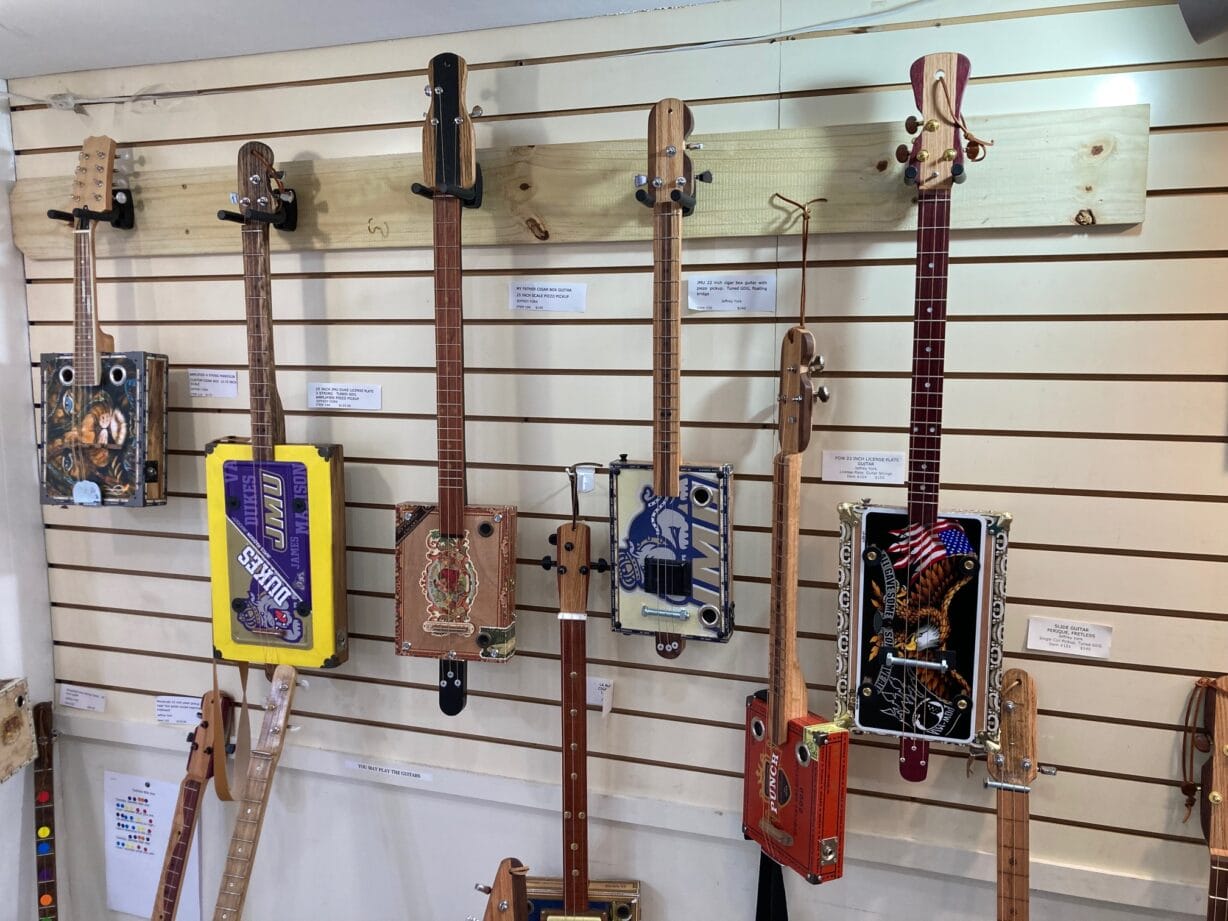
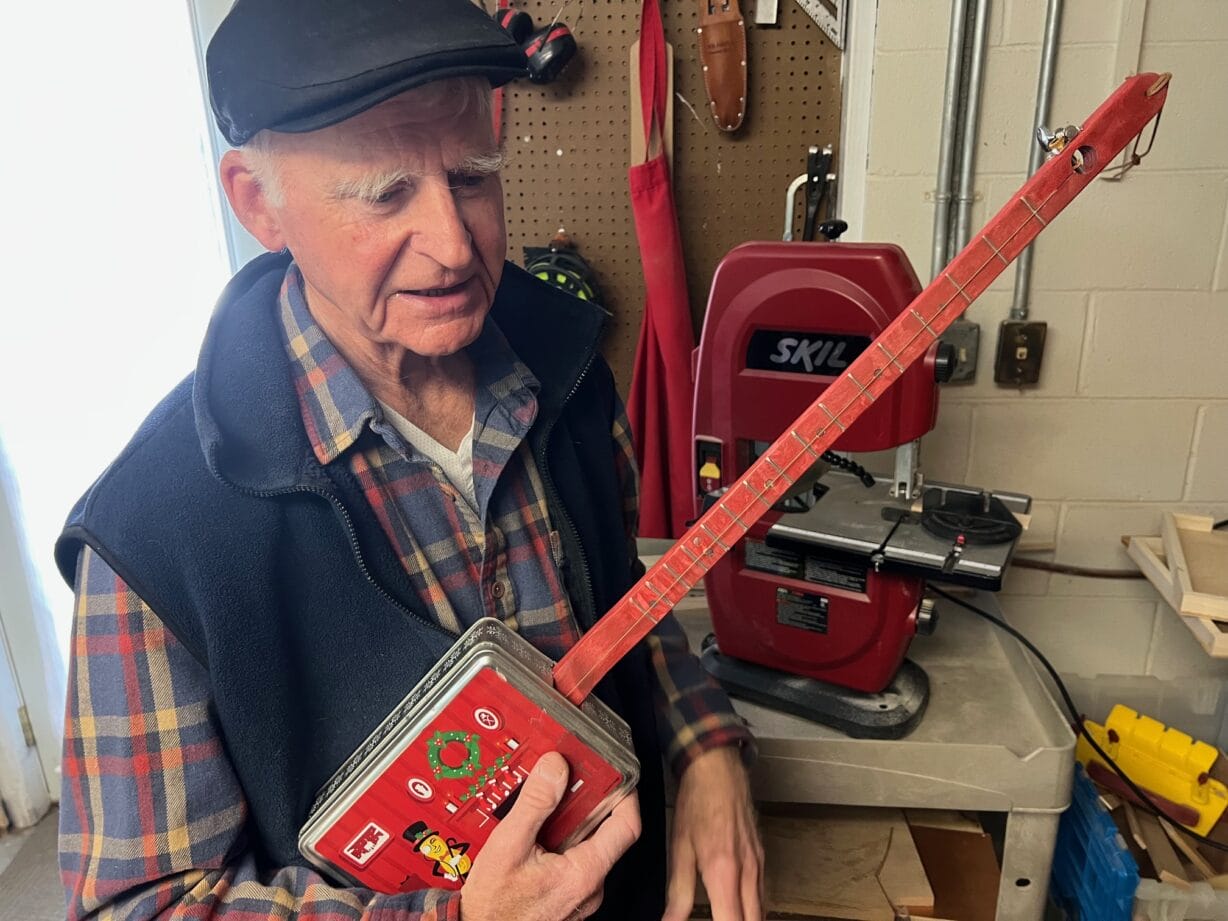
Jeff York makes good use of them. Oasis Fine Art & Craft in downtown Harrisonburg displays his talent with decorated cigar-box guitars.
He turns the boxes into colorful three-string electric guitars and other instruments with one, two, four, five … up to eight strings. Those include dulcimers, ukuleles, mandolins, fiddles and one-string acoustic “canjos,” or banjos made with any type of can as a resonator.
York, 73, is a retired urologist and resident of the Highland Park neighborhood in greater Harrisonburg. He started crafting his instruments six years ago. He estimates he’s made about 100 of them and sold 30.
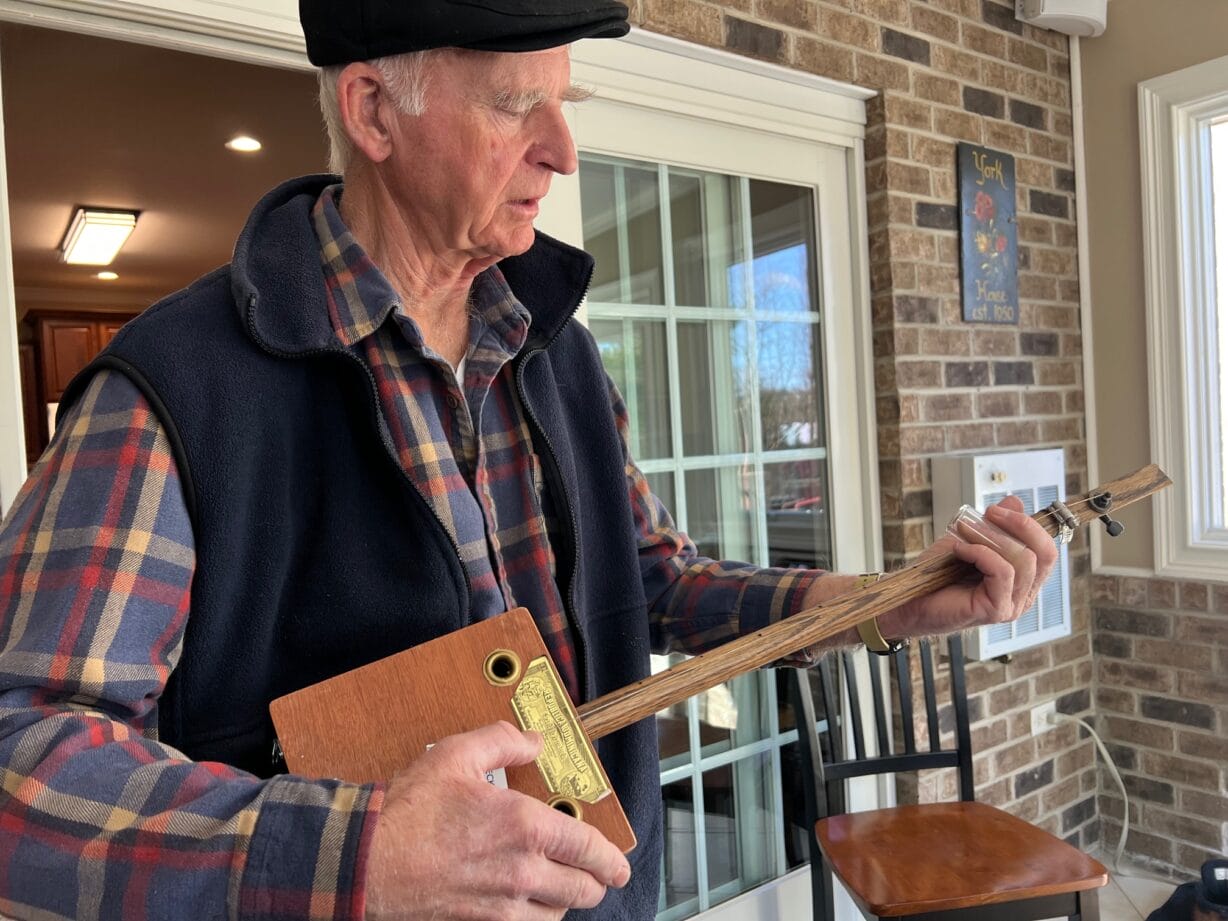
His corner display at Oasis includes tiny Honeytone amplifiers ready for anyone to plug and play.
Visual themes for his instruments include nature scenes, cigar-smoking bulldogs, the American flag, the JMU logo, Santa Claus, and police, fire and military license plates.
Arthritis made him retire from medicine. He had a cigar box lying around, being an occasional cigar smoker. How-to videos on YouTube got him launched.
Why three strings? They’re much easier to play, there’s a rich tradition going back to the original Southern blues artists, and there’s a lively festival circuit using them.
“There are cigar box festivals all over the country,” he says. Variations on the cigar-box body include shovels, oars, ironing boards, axes and mop handles. Dabblers have included Paul Simon, Paul McCartney, B.B. King, ZZ Top and Jimi Hendrix.
Why cigar boxes? In the 1800s, the government imposed stamp taxes on cigars, and they were cheaper per piece if sold in boxes of 25. Many were made of cedar, a good resonator, and many were a standard size.
York gets his cigar boxes at smoke shops, sometimes paying a dollar or two each.
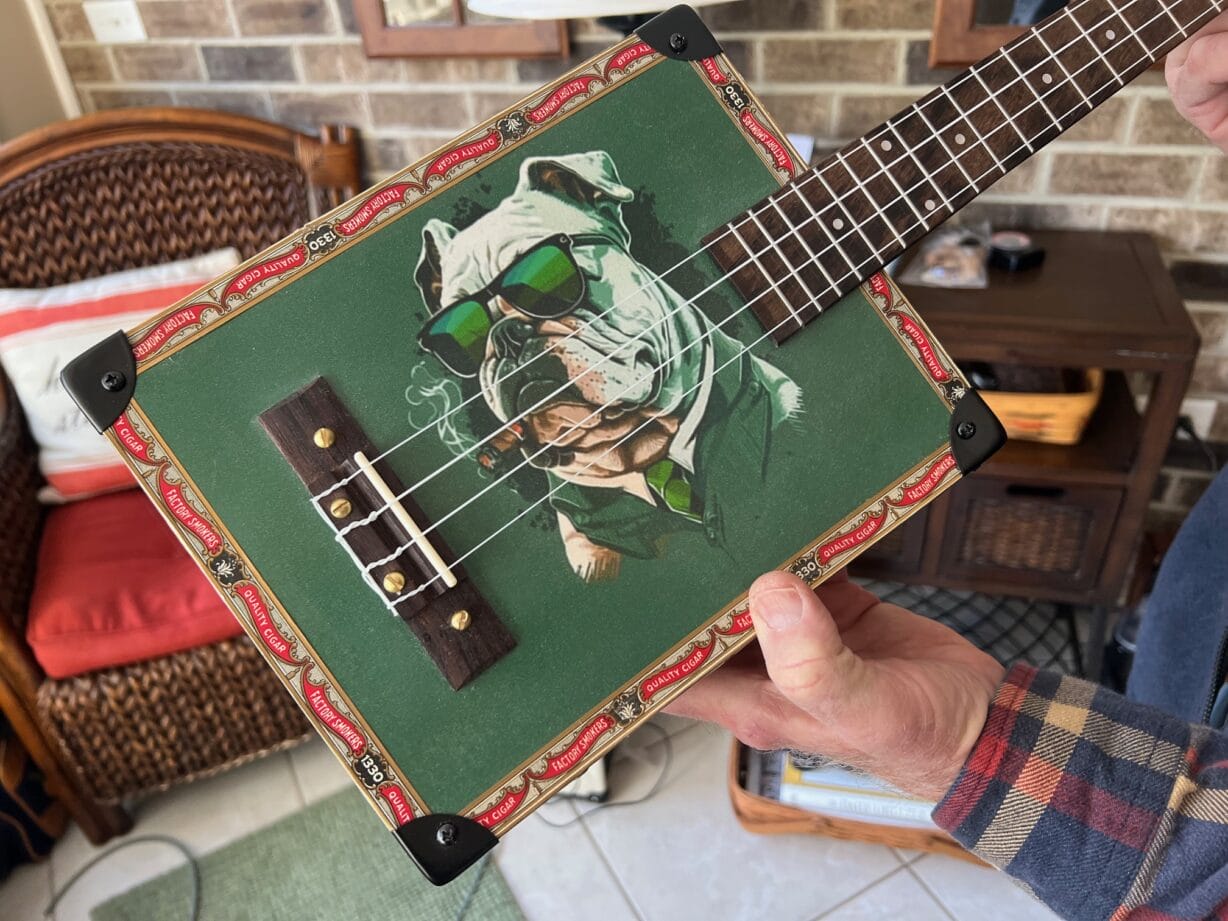
His usual price for a three-string is $150. He donates some to nonprofits for fundraisers, including Blue Ridge Free Clinic and veterans’ groups.
He also brings his instruments to the Harrisonburg Farmer’s Market on Saturdays.
“I take my canjos and cajole kids to play.”
He also makes knife handles, furniture and charcuterie boards.
“The natural wood patterns come out beautifully,” says his wife, Debra.
The neck he attaches to a cigar box is usually oak and requires “a lot of sanding.” Whereas most guitars have a 25-inch neck, his three-strings are usually 23. He usually attaches piezoelectric pickups, which are ceramic on copper.
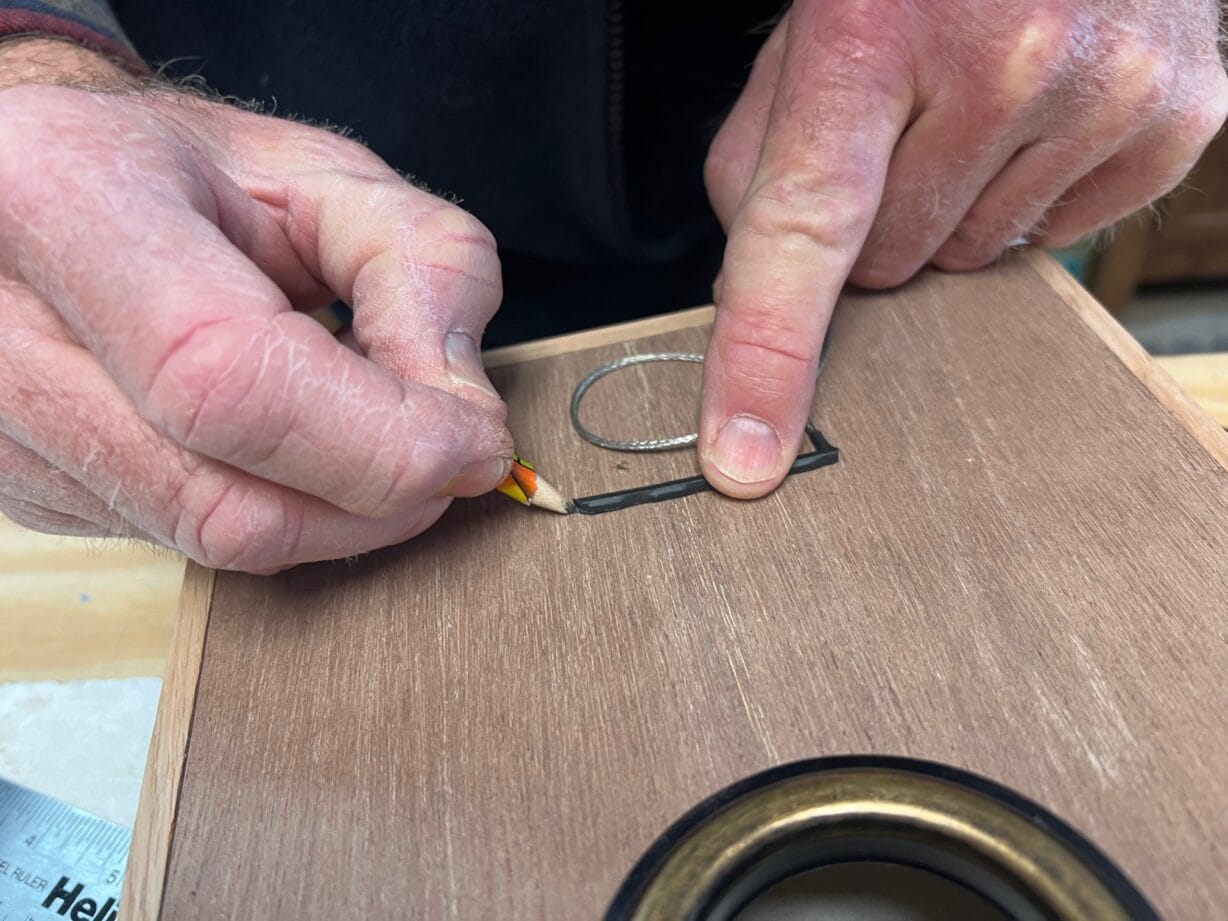
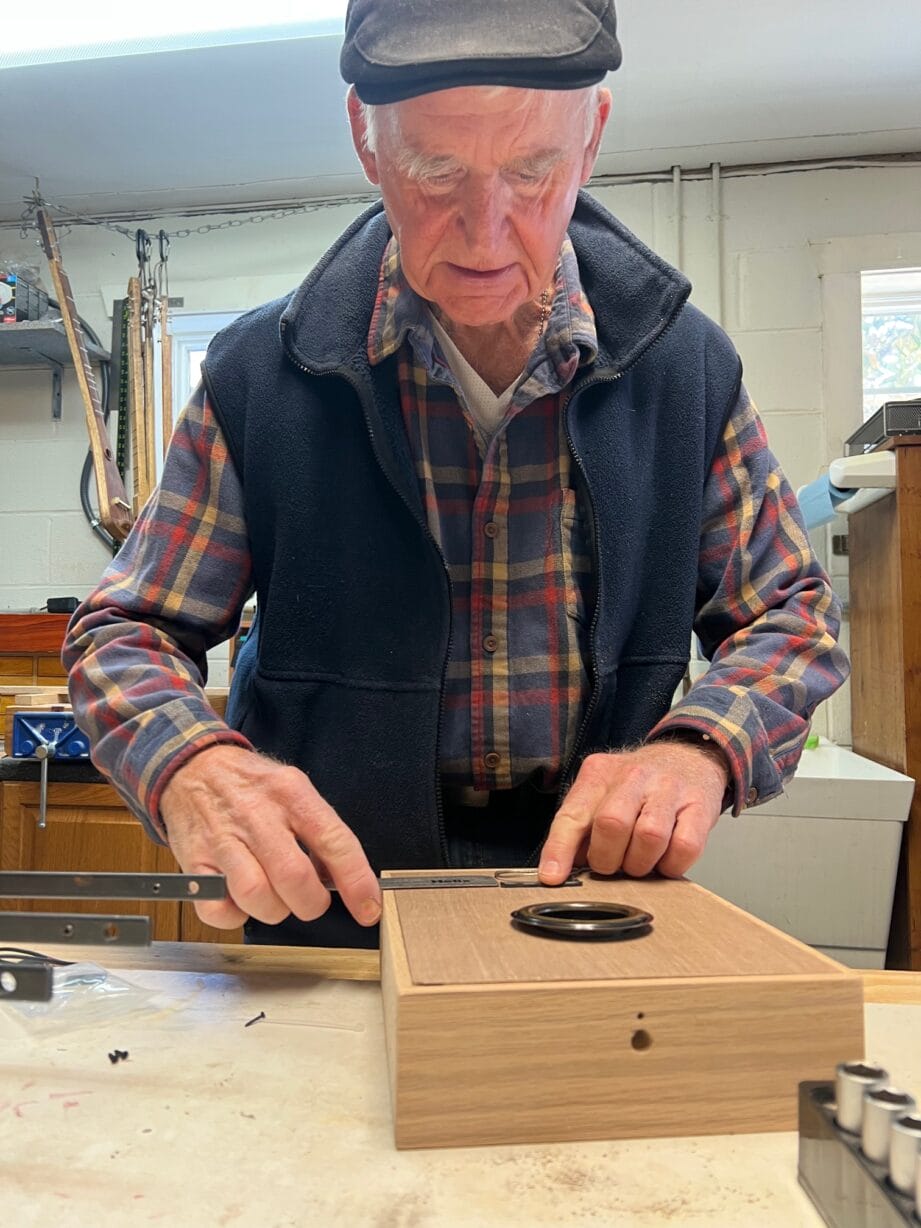
“I don’t like regular pickups because they don’t give you the hillbilly sound. That’s what it’s all about, Americana.”
On one of his most unusual three-strings, the box is painted with an ocean scene, the resonator hole is a small, shiny sink drain and an oversize hand screw is used as a bridge. The painter is Delaney Westwood, a fellow artist at Oasis, who bought one of his guitars.
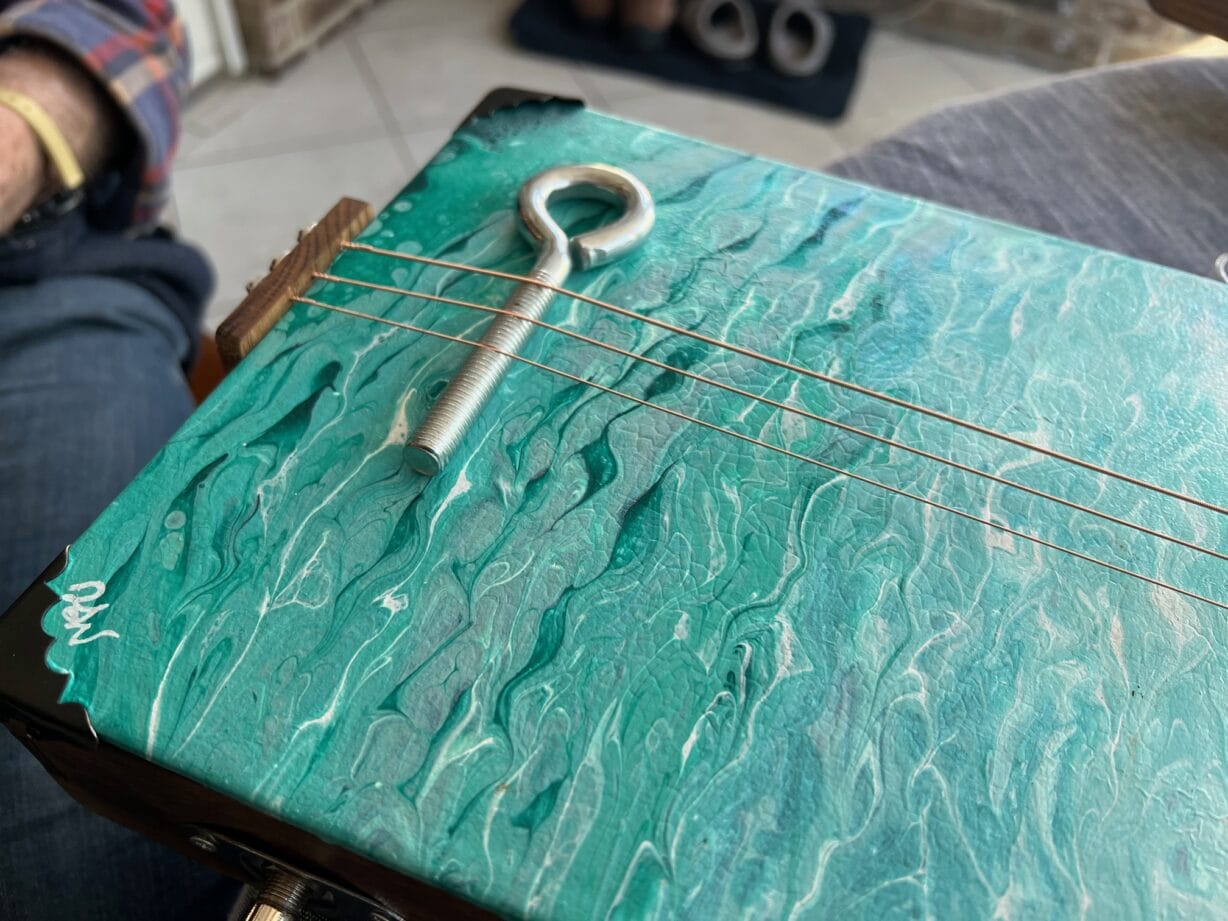
“She does great stuff,” York said.
“He’s really passionate about what he does,” Westwood says. “He’s a very talented woodworker. It was fun to paint on wood for a change.”
York will show up at Oasis two or three times a month and gets a kick out of people’s reactions.
“Half the people say, ‘Well, I have a guitar. I’m not sure how to play it.’ I say, ‘Sit down and I’ll teach you ‘Smoke on the Water” or ‘Wild Thing.’ I show ’em how to hold their hand. I don’t care if anybody buys a guitar. Get back into the love of music.”
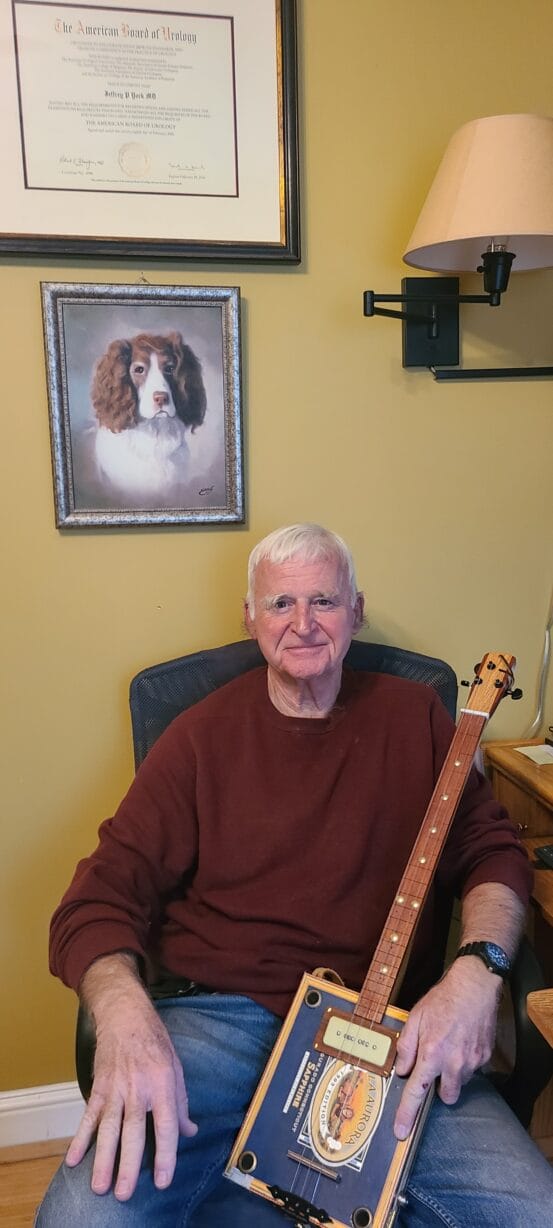
He demonstrates a “power chord: Barre-chord any fret. [This one] is a fifth. That’s how I tune most of them. You can play pretty much any songs from the ’60s.”
He likes to evangelize.
“One time I said to this guy, ‘Why don’t you and your son get together and build a canjo?”
He spent weeks making 25 canjos for a group of kids to play “Twinkle, Twinkle Little Star” at the Second Home Learning Center.
He’s also done a little tutorial at Sunnyside retirement home.
“Old people got pretty excited about it. [At first] they say, ‘I can’t play. My fingers don’t work.’ ” He enjoys showing how simple it is.
Debra observes, “He just likes creating things and keeping busy.”
He replies, “She’s just glad I do this and don’t sit around and watch TV all day. For me it’s 100% or don’t do it at all.”
Items at Oasis are sold at oasisfineartandcraft.org.
Mike Grundmann is a retired JMU journalism professor who previously worked as a reporter and editor for eight California newspapers, including the Los Angeles Times. He has produced 10 award-winning documentaries.
Thanks for reading The Citizen, which won the Virginia Press Association’s 2022 News Sweepstakes award as the top online news site in Virginia. We’re independent. We’re local. We pay our contributors, and the money you give goes directly to the reporting. No overhead. No printing costs. Just facts, stories and context. We value your support.