

By Mary Ann Zehr, contributor
A monthly column by a local teacher and reader about connecting with books and taking in Harrisonburg’s literary scene.
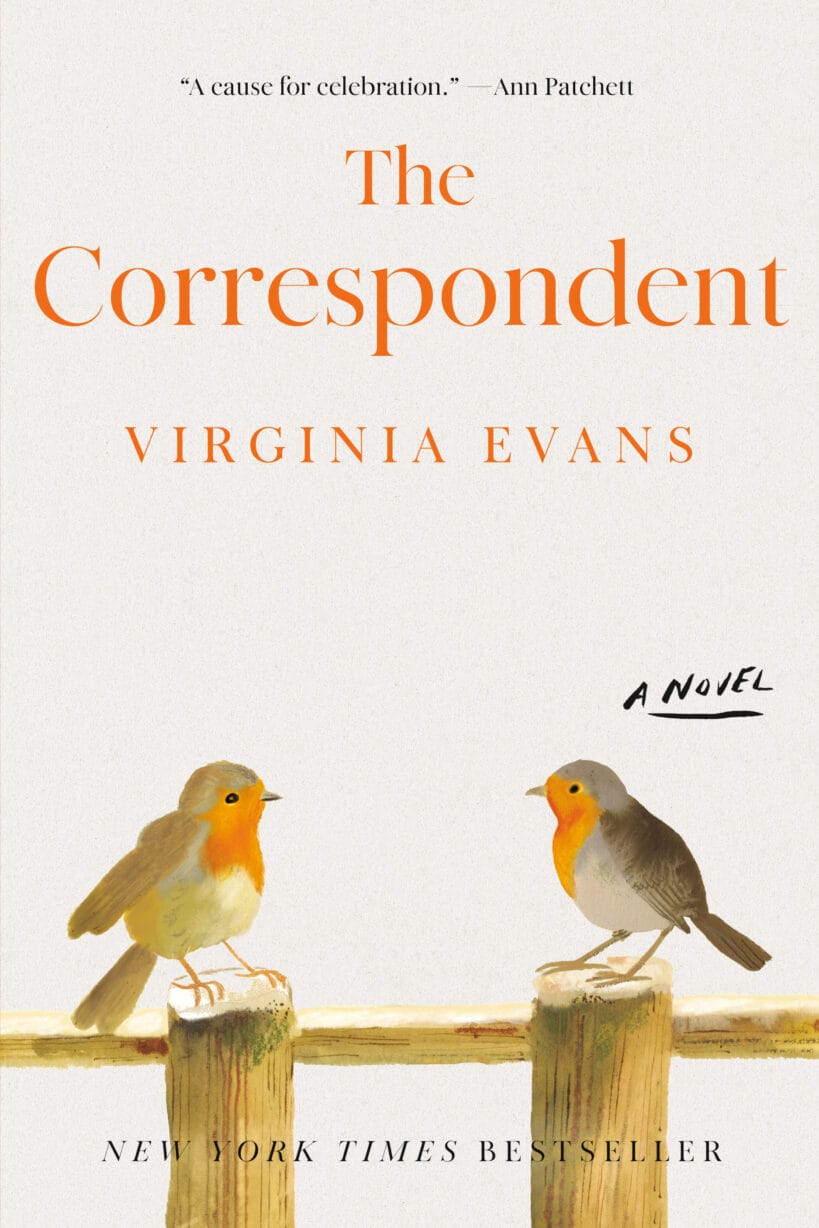
~ Evans, Virginia. The Correspondent. Crown, 2025. ~
When some of my friends and I were in our 20s in the 1980s, we penned many letters to each other. We had met in college or in jobs that we took soon after graduation. We occasionally exchanged visits after we no longer lived in the same community. Phone calls were expensive. To keep up and grow our long-distance friendships, we corresponded with each other.
Now, when I re-read batches of letters that one or the other of us saved, I find the vulnerability in them astounding. We floated ideas about possible career paths, questions about faith and spirituality, and angst over romantic relationships, all while keeping a humble, light-hearted, and funny tone. “So I’m lonely for masculine companionship. What’s horrible about that? Nothing, that’s what,” a friend wrote in a letter to me dated 1988.
Perhaps because of my nostalgia for this pre-Internet era of letter writing, I have an affinity for epistolary essays and novels.
About 20 years ago, I read and loved the book, Gilead, the Pulitzer-Prize-winning epistolary novel by Marilynne Robinson. The novel is one long letter written on different occasions by a father to his son.
Now, Virginia Evans has skillfully used the genre of the epistolary novel in The Correspondent to convey nine years in the winter season of life of the novel’s protagonist, Sybil Van Antwerp. The title captures an important aspect of Sybil’s identity. While most people in the world have stopped writing letters by hand, Sybil has continued with the practice. She uses fountain pens on good paper. I’m on Sybil’s side when she defends letter-writing to someone who deems it “quaint and impractical.”
Readers meet Sybil when she is 73 and living alone in a fine home in Annapolis, Maryland, in 2012. She is a retired lawyer and a divorcee. She has two grown children. The novel includes letter exchanges between Sybil and her brother, Felix; famous authors, such as Joan Didion; her lifelong friend and pen pal, Rosalie; the chair of an English department at a university where Sybil wants to audit a class; and her neighbor, who bestows on her small gifts, such as roses from his garden. The novel also contains some email exchanges because Sybil does not always have a street address for people with whom she wishes to correspond.
Sybil took up letter writing when she was a child. While Sybil was away at summer camp in 1953, she wrote a letter to Rosalie. Sixty years after that first letter, they are still communicating some of their deepest thoughts to each other through letters. They also correspond about the books they are reading. At the end of most of their letters, they name the title of a book that they are reading and ask, “What are you reading?”

“I’m very close to the end of my life, Felix, almost there, and I don’t want to muck it up more than I already have,” Sybil writes in a letter early in the novel. She doesn’t seem to have a lot of expectations for this late season of her life.
However, the surprise to Sybil and also to me as a reader is that, as she takes social and emotional risks, her life gradually becomes much fuller. These actions cause me to develop affection for Sybil and root for her.
One example of a risk is that Sybil dislikes public speaking, yet she accepts the invitation to speak at a memorial service. I can identify with how hard it is to put oneself out there to speak publicly when one really doesn’t have to. One really doesn’t have to do a lot of things if one doesn’t want to after retirement, right?
Sybil corresponds regularly with a teenager, the troubled son of a former colleague. They converse through letters with an honesty that just doesn’t work in face-to-face intergenerational interactions. The letters seem to be a lifeline for the boy. She begins to correspond with a man who heard her speak at the memorial service. And then there’s that neighbor who sends her modest gifts, with whom she exchanges polite formal notes.
The letter exchanges between Sybil and Rosalie and also Sybil and Felix give the novel emotional depth. Sybil and Rosalie’s letters are affectionate and wise and honest—so honest that at one point the result is confrontation and hard feelings and a cooling-off period before the correspondence resumes. Sybil and Felix’s letters reflect how the siblings have always had each other’s backs.
It can be a bit challenging to piece together the story of a character conveyed only in letters. I needed to be attentive to clues that pointed to important events because the actual events are often not described in the novel. And what’s with that letter that Sybil is writing to someone who is not identified that Sybil adds to in different stages?
Sybil is quirky and resistant to change. Yet she is courageous enough to disrupt some of her lifelong patterns, which makes the novel come alive.
I’ve learned a few things from Sybil. Like her, I want to be open to taking risks and disrupting lifelong patterns. I am feeling inspired by Sybil to write a few long letters–not emails–to friends in my generation. I’ll share some insights about current transitions in my life, and I’ll enthusiastically recommend The Correspondent. At the end of each letter, I’ll ask, “What are you reading?”
Virginia Evans, a graduate in English literature of James Madison University, will be in conversation with local author Sofia Samatar about The Correspondent from 6:00 pm to 7:00 pm on April 9 in the Concert Hall of JMU’s Forbes Center of the Performing Arts. This is not a ticketed event. It’s open to the public.
Editor’s note: This story was updated on 4/6 to correct Virginia Evans’ name in a photo caption, which was the result of an editing error.
Thanks for reading The Citizen, which won the Virginia Press Association’s 2022 News Sweepstakes award as the top online news site in Virginia. We’re independent. We’re local. We pay our contributors, and the money you give goes directly to the reporting. No overhead. No printing costs. Just facts, stories and context. We value your support.